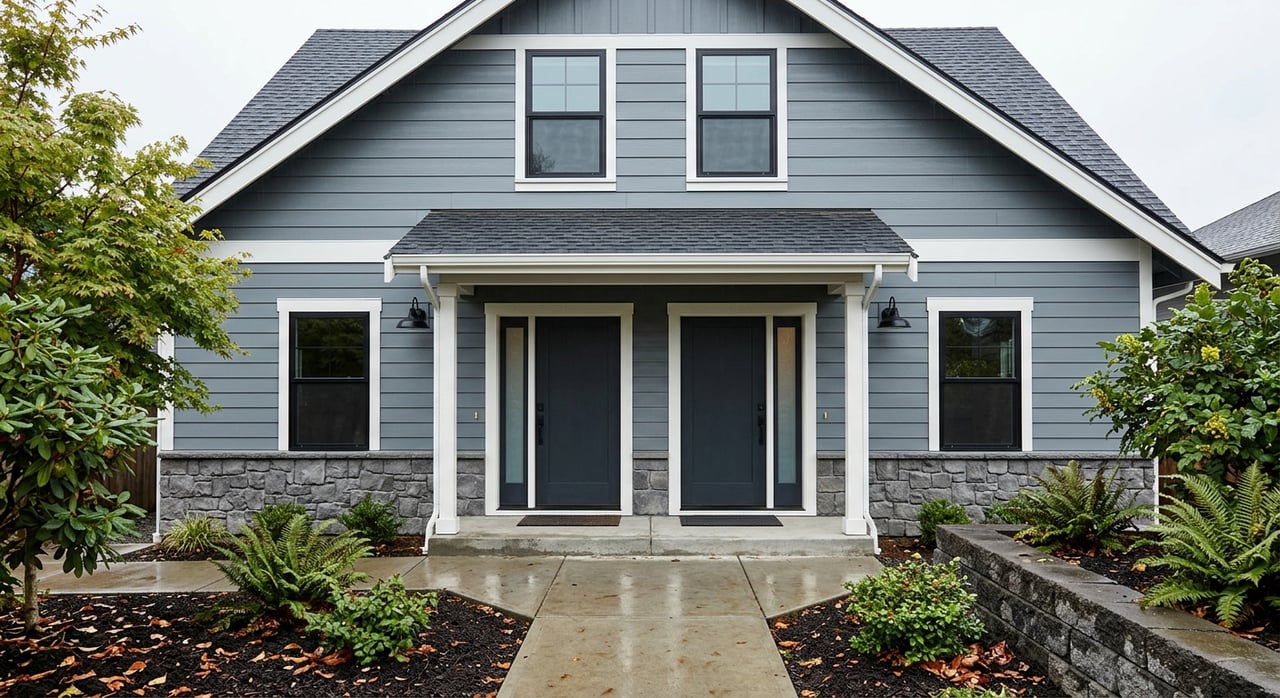
Evaluating Small Snohomish WA Investment Properties
April 2, 2026
April 2, 2026
If you are looking at small investment properties in Snohomish, it is easy to get pulled in by charm, potential, or a promising rent estimate. But in a market where home values are high and rents can vary a lot by property type, the numbers need to do the heavy lifting. The good news is that with a simple framework, you can evaluate opportunities more clearly and avoid expensive assumptions. Let’s dive in.
Before you analyze any deal, it helps to understand the local backdrop. According to the U.S. Census QuickFacts for Snohomish, the city has 10,534 residents, about 4,176 dwelling units, and a housing mix that is roughly 64% single-family and 36% multifamily. That matters because smaller multifamily properties make up a more limited share of the local inventory.
Snohomish also has a meaningful renter base. Census data shows an occupancy split of roughly 55% owner-occupied and 45% renter-occupied, with an average commute time of 29.1 minutes. For investors, that supports the idea that Snohomish functions in part as a commuter market, which can influence demand and property type preferences.
Pricing and rents are where careful underwriting becomes especially important. Zillow’s Snohomish home value data shows an average home value of $926,177, a median sale price of $932,667, and a median list price of $1,004,975, while Zillow rent estimates for Snohomish show an all-property average rent of $2,437. That price-to-rent spread means many buyers should focus less on immediate cash flow assumptions and more on accurate expenses, realistic rents, and legal value-add potential.
One of the biggest mistakes investors make is relying on one blended city rent number. In Snohomish, rent estimates vary depending on the data set and property type. Zillow reports an all-property average rent of $2,437, while studio, one-bedroom, two-bedroom, and three-bedroom estimates differ significantly.
That is why unit-level analysis matters. For example, Zillow estimates Snohomish one-bedroom rents at $1,450 and two-bedroom rents at $2,000, while apartment-focused data from the same market can look different. Instead of plugging in a citywide average, compare each unit to similar local rentals by size, layout, condition, and likely tenant appeal.
You do not need a complicated spreadsheet to screen a deal well. A clear underwriting process starts with gross scheduled rent, subtracts vacancy and credit loss, adds any other income, and arrives at effective gross income. From there, subtract operating expenses to get net operating income, or NOI.
Your final cash flow comes after debt service and capital reserves. Two numbers matter a lot here: cap rate, which is NOI divided by purchase price, and DSCR, which is NOI divided by annual debt service. These metrics help you compare opportunities and test whether a property can reasonably support its financing.
A property can look good on paper until you leave out recurring costs. The IRS rental property guidance lists common rental expenses such as cleaning and maintenance, insurance, interest, legal and professional fees, management fees, repairs, taxes, utilities, and depreciation. For deal analysis, several of those items belong in your regular operating budget from day one.
Property taxes are especially important in Snohomish. Based on the city data in the research, a typical 2026 residence property tax is $6,222.15, with a levy rate of $9.7771 per $1,000 of assessed value. Taxes should be treated as a recurring annual expense, not just a closing cost line item.
A practical expense checklist includes:
Small multifamily can be attractive because it spreads risk across more than one unit. But in Snohomish, multifamily housing represents a smaller part of the total stock, according to the city’s housing information page. That can mean fewer acquisition opportunities and more variation from one property to the next.
When you evaluate a duplex, triplex, or fourplex, underwrite each unit separately. Look at actual in-place rent, lease terms, turnover risk, parking, storage, condition, and whether any units are under market based on current local comps. A building with uneven unit quality or weak rent-roll documentation deserves extra caution.
If you are considering a short-term rental strategy, start with city rules before you run revenue projections. The City of Snohomish short-term rental page says short-term rentals are allowed in zones where dwelling units are allowed, including single-family and multifamily zones, plus several commercial and mixed-use zones. They are not allowed in Industry, Airport Industry, or Parks, Open Space & Public zones.
The city does not require a special short-term rental permit, but it does require a City of Snohomish business license, tax compliance, and a 30-day maximum stay. The city also states that only the entire structure or a self-contained living space may be rented, and only one self-contained living space within a detached single-family residence may be rented at a time. That means your layout and intended operating model need to match the rules.
Short-term rental income can look strong until taxes and turnover costs are added back in. The Washington Department of Revenue lodging guide classifies transient lodging as stays of less than one month, or less than 30 days in a row. The City of Snohomish says the total short-term rental tax rate is 11.3%.
That total includes state sales or use tax, local sales or use tax, and the special hotel or motel tax. The DOR also notes that lodging sales can include cleaning fees, pet fees, smoking fees, and damage-waiver charges. If you are underwriting an STR, those taxes and taxable add-on fees need to be included in your model, along with extra labor for turnover, guest communication, supplies, and compliance.
In a high-basis market, value-add often matters more than hoping the deal works on day-one cash flow alone. The city’s housing page notes that Snohomish land use code allows accessory dwelling units and manufactured housing. That can create potential upside if zoning, site conditions, and permits support your plan.
For many buyers, the stronger thesis may be improved functionality rather than fast appreciation. That could mean adding legal living space, improving layout efficiency, or buying a property that works for a house-hack strategy. The key word is legal. Before you assign value to an added unit or future income stream, confirm that it can actually be permitted and used as intended.
Strong underwriting starts the process, but due diligence protects you before closing. In Snohomish, a few local questions can quickly separate a solid opportunity from a risky one.
Use this checklist as you review a property:
These questions are simple, but they can keep you from overpaying for projected upside that may never materialize.
Every market has its own investment rhythm. In Snohomish, the local housing mix, current pricing, and rent levels suggest that investors should stay disciplined on basis, underwrite expenses carefully, and treat rent assumptions with caution. The best deals are often the ones where the story is supported by clear numbers, realistic operations, and local rules.
If you want help evaluating a duplex, single-family rental, house-hack, or short-term rental opportunity in Snohomish, Dani Robinett can help you look at the local context, spot red flags, and make a more confident decision.
Stay up to date on the latest real estate trends.

Dani is dedicated to helping you find your dream home and assisting with any selling needs you may have. Contact her today for a free consultation for buying, selling, renting, or investing in Washington.
DANI ROBINETT
ADDRESS 1000 SE EVERETT MALL WAY SUITE 201 EVERETT, WA 98208