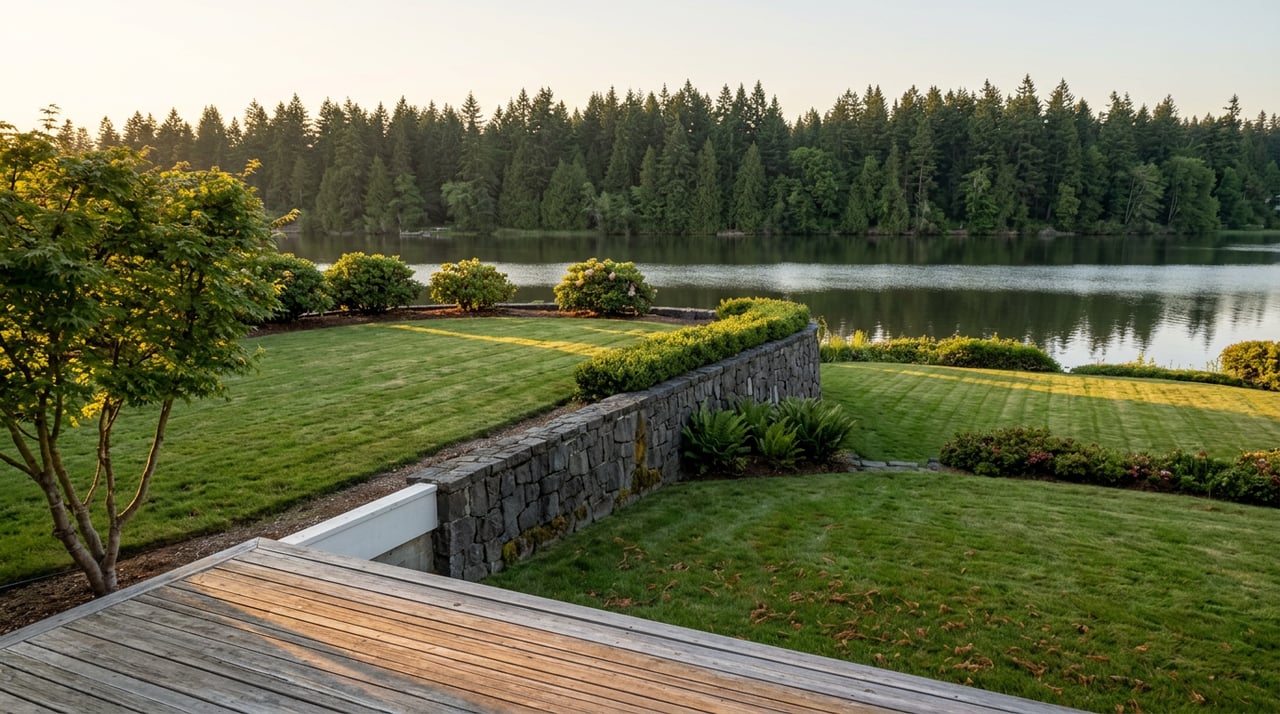
Lake Stevens Waterfront Permit Disclosure for Docks & Bulkheads
August 27, 2026
August 27, 2026
A dock looks like part of the house. On paper, in Lake Stevens, it almost never is.
Every property that touches the lake, or sits within 200 feet of it, falls inside the city's Shoreline Master Program jurisdiction. That single fact explains most of what surprises buyers and sellers once a waterfront transaction actually gets moving. The dock, the bulkhead, the mooring buoy, even the deck steps down to the water, all sit inside a regulatory zone with its own permit history, separate from the house itself. A seller who can hand a buyer that history closes faster. A seller who assumes the dock just comes with the house usually finds out otherwise during inspection week.
That gap between what a lakefront property looks like and what it is on paper is the real story behind Lake Stevens waterfront pricing this year. As of February 2026, the citywide median sale price in Lake Stevens sat at $683,000, essentially flat from a year earlier. Waterfront listings have been starting well above that, commonly in the $750,000 to $1 million range before accounting for frontage width or a newer dock. Buyers are not just paying for a view. They are paying to inherit a stack of permits, and sometimes a stack of permit problems, that came with the parcel long before they arrived.
The city's Shoreline Master Program, first adopted in 2013 and given a mandatory update in 2018 and 2019, regulates development along Lake Stevens itself, along with Stitch Lake, Catherine Creek, and Little Pilchuck Creek, plus the shorelands within 200 feet of the ordinary high water mark of each. Any property inside that band is inside shoreline jurisdiction, whether or not the owner thinks of themselves as a "waterfront" seller.
Generally, a shoreline permit is required for any new, expanded, or replaced development inside that jurisdiction. That covers docks and bulkheads, obviously, but it also reaches decks, retaining walls, and other structures that a homeowner might treat as routine backyard work anywhere else in the city.
Lake Stevens limits piers or docks at single-family residences. Docks and similar structures generally need to meet side-property-line setbacks. On a lake with a limited and mostly built-out shoreline, that setback rule does real work. A narrow lot can end up with fewer realistic dock configurations than the listing photos suggest, and a buyer planning to expand or relocate a dock after closing should confirm what the lot actually allows before writing an offer, not after.
Buoys and mooring markers get their own layer of oversight. Under the city's water recreation policy, placing a buoy or marker in the lake without a permit is not allowed, and residential owners without a dock can apply for a private mooring buoy through the same online permit process the city uses for other land use applications.
Here is where the paperwork gets genuinely strange, and where a seller's history with the property starts to matter more than its condition.
According to the Washington State Department of Ecology, Washington law sets a dollar threshold above which shoreline work counts as "substantial development" and needs the heavier Substantial Development Permit. That general threshold is $8,504, a figure the state adjusts for inflation every five years, with the next adjustment due July 1, 2027. But residential docks got their own carve-out in 2023: if a dock is being replaced like-for-like, at equal or smaller square footage, in a jurisdiction with an updated shoreline program, the exemption threshold jumps to $28,000. A homeowner can spend more than three times the general threshold on a straight dock swap and still avoid full permit review, as long as the footprint does not grow.
| Project | Governing threshold or rule | What actually happens |
|---|---|---|
| General shoreline development | $8,504 fair market value, adjusted every 5 years | Above this, a full Substantial Development Permit is required |
| Dock replaced like-for-like, same or smaller footprint | $28,000 exemption (effective August 2023) | Can skip the Substantial Development Permit even at higher cost |
Docks, bulkheads, and lifts also sit inside the city's regulatory floodplain, which means over-water and in-water improvements typically need a separate floodplain development permit in addition to whatever shoreline permit applies. That is a second file to track down, not a substitute for the first.
None of this is theoretical to a buyer walking a dock for the first time. Lake Stevens runs an active lake management program built around two ongoing issues: invasive aquatic weeds and phosphorus that feeds algae blooms. The city monitors plant growth and applies targeted, selective herbicide treatments to control invasive species like Eurasian watermilfoil while trying to leave native vegetation alone. On the phosphorus side, the city partners with Snohomish County to apply annual aluminum sulfate treatments that bind phosphorus in the water and sediment, a program that traces back to an aeration device installed in 1994.
This work has a visible seasonal footprint. Treatment days come with posted signage on affected shoreline and short water use precautions, typically a swimming or irrigation restriction of about 24 hours in the treated zone. A buyer touring a home in July or August who sees a treatment sign is not looking at a problem unique to that property. They are looking at routine lake maintenance, and a seller who can explain that in one sentence looks a lot more credible than one who has never noticed the signs before.
Lake level itself is not left to rainfall alone. The city manages outflow through a weir structure that regulates how much water leaves the lake, which is worth knowing if a buyer starts asking about water level swings between seasons.
None of this is new. A city planning study built around a 2010 aquatic plant survey found milfoil covering roughly 135 acres of the lake at the time, and documented that of the shoreline homes then lining the lake, more than half already had some form of bulkhead, riprap, or other armoring in place. That detail matters for sellers today mostly as a reminder: an older bulkhead with no clear paper trail is common on this lake, not an outlier, and buyers researching the property will eventually ask about its condition and permit history whether or not the listing brings it up first.
A short list of what actually needs confirming, for either side of the transaction:
Does every waterfront home in Lake Stevens have bulkhead permits on file? No. Many of the bulkheads along this lake predate the 2013 Shoreline Master Program, and older armoring was not always permitted the way current work is. That is exactly why confirming the paper trail early, rather than assuming it exists, protects both sides of a sale.
If I just want to replace the boards on my existing dock, do I need a permit? Often a simple decking replacement avoids a full building permit, but shoreline jurisdiction still applies, and a land use permit may still be required even for work that feels cosmetic. Confirm the scope with the city before assuming it is exempt.
Is the milfoil and algae program something a buyer should worry about? It is closer to routine lake maintenance than a red flag. The city runs it every season with posted treatment notices and short water use precautions. A seller who can describe it in plain terms turns a potential concern into a non-issue during a showing.
Waterfront property on Lake Stevens carries real value, but the premium buyers pay is inseparable from the permit history sitting underneath it. Getting that history straight before a home goes on the market, or before an offer goes in, is the difference between a clean closing and a renegotiation over something that should have been settled weeks earlier.
If you are weighing a sale on the water, or trying to understand what a specific lot actually allows before you make an offer, Dani Robinett can walk through the permit picture with you. Schedule a Consultation to get a clear read on your property before you list or write an offer.
This article is general information, not legal, tax or financial advice. Consult a qualified professional about your situation.
Stay up to date on the latest real estate trends.
Dani is dedicated to helping you find your dream home and assisting with any selling needs you may have. Contact her today for a free consultation for buying, selling, renting, or investing in Washington.
DANI ROBINETT
ADDRESS 1000 SE EVERETT MALL WAY SUITE 201 EVERETT, WA 98208