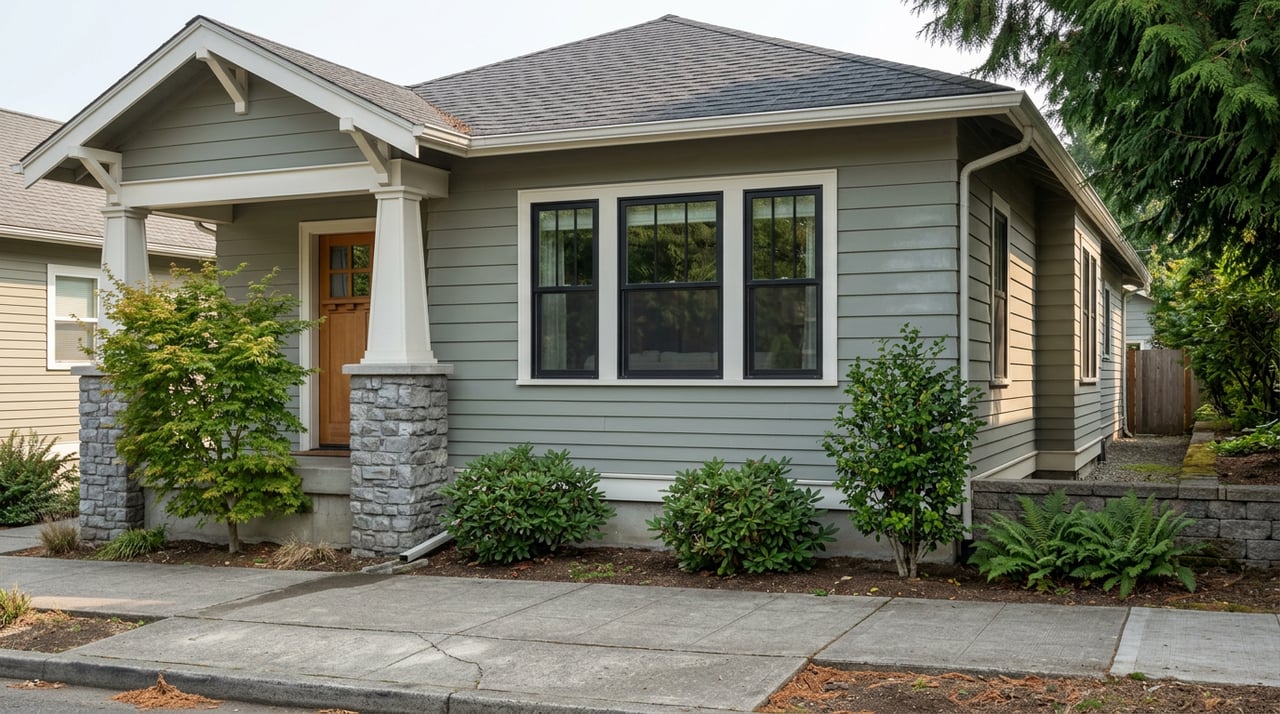
Why Snohomish Didn't Get the Memo About a Cooling County
August 13, 2026
August 13, 2026
Pull up a Snohomish County market report this month and the story is consistent across every source. More listings. More days on market. More room for buyers to negotiate. Someone who has been waiting on the sidelines for exactly that kind of shift might reasonably assume the town of Snohomish is loosening up right along with it.
Then they start touring homes inside the city itself, watch the third one they liked go pending in four days, and start to wonder if they misread the numbers.
They didn't. They read the wrong Snohomish.
The confusion comes from a boundary problem. "Snohomish County" and "the city of Snohomish" are not the same market, and right now they are moving in opposite directions.
Countywide, the most recent brokerage-reported figures for July 2026 show 2,246 homes for sale, up about 37% from 1,641 a year earlier, while closed sales barely moved, 760 compared with 767 the July before. Months of supply climbed from 2.1 to 3.0. The countywide median sales price slipped to $746,000 from $799,000 the year prior, a decline of roughly 6.6%. Homes averaged 29 days on market, essentially flat with the 28 days a year earlier, but sellers were still netting about 99% of their final list price.
Inside city limits, the trailing three months ending May 2026 tell a different story. The median sale price in the city of Snohomish was $750,000, up 6.7% from the same period a year earlier. Homes sold after about 7 days on market on average, down from 12 days the year before, with typical listings drawing two offers. Fewer homes actually changed hands, 38 in May 2026 compared with 58 the year before, even as price and speed both tightened. That combination, fewer sales but faster and pricier ones, is what scarcity looks like, not what softening looks like.
A buyer using the county headline to plan an offer strategy in the city of Snohomish is planning for a market that doesn't exist where they're shopping.
The county-level inventory jump is real. It just hasn't reached the city's resale shelves. The city of Snohomish's downtown core sits inside the Snohomish Historic District, the first district of its kind designated in Snohomish County and the reason the town markets itself as the Antique Capital of the Northwest. Historic districts don't add buildable lots. They preserve the ones already there. That leaves the city with a fixed, small footprint of resale housing near First Street regardless of what's happening thirty minutes away in unincorporated parts of the county.
The new supply that will eventually loosen this up exists, but it's still working through the pipeline rather than sitting on the market.
The largest piece of that pipeline is a proposal the city's own development-projects page refers to by its old use: the County Shop Site, addressed at 1201 Bonneville Avenue. As currently proposed, it calls for two mixed-use buildings along Avenue D with underground parking, ground-floor commercial space, and three residential floors totaling an estimated 115 units, plus roughly 106 separate townhome units on a lower terrace facing Bonneville Avenue, along with children's play areas, public plazas, and open space. It is still moving through the city's permit review process, which means none of those 221 combined units are listings a buyer can tour today.
Two smaller subdivisions are also in the queue on the city's edges, a 39-lot development off Terrace Avenue and a 32-lot development off Weaver Road. Both add single-family inventory eventually. Neither helps a buyer competing for a listing near downtown this month.
Until one of these projects actually delivers finished units, the city's resale supply stays exactly as tight as it looks in the May 2026 numbers, no matter how many extra listings show up in the countywide count.
If new construction near downtown is still years out, the city is not waiting quietly. Snohomish is in the middle of a First Street Master Plan, a streetscape overhaul covering sidewalks, parking, lighting, and crosswalks along the historic corridor. Part of the motivation is not cosmetic. The underground utilities beneath First Street are nearly a century old and need replacing. The city's own timeline anticipated a final master plan reaching the Council in late 2025 or early 2026, with construction itself expected to take several years once funding and engineering are in place.
Separately, WSDOT has proposed new southbound lanes and two new bridges on SR9 between Marsh Road and the Second Street interchange, aimed at reducing congestion through the corridor that connects Snohomish to the rest of the county.
Century-old utility replacement and new river bridges are multi-year, multi-million-dollar commitments.
The buyer who drives through Snohomish today doesn't see the permit portal. They see a downtown adding to what's already there. Yelp reviewers this summer were still talking about Rocco Italian Steakhouse, a new arrival one reviewer described as the moment "fine Italian dining has arrived in Snohomish." It joins an established lineup along and near First Street that includes Fred's Rivertown Ale House, The Repp, and Trails End Taphouse & Restaurant.
Meanwhile, the retail growth that is happening at scale, at Snohomish Station on the edge of town, sits apart from the historic core rather than inside it, which keeps First Street's identity, and its housing scarcity, intact.
A few practical takeaways follow directly from the numbers above.
First, don't import county-level negotiating room into an offer on a home inside city limits, especially anywhere near the historic core. The county's added leverage is showing up in the countywide averages. It is not showing up in the city's May 2026 time-to-pending figures.
Second, if timing matters more to you than location, more room to negotiate is more likely to show up in unincorporated parts of the county right now than inside Snohomish city limits, based on the current split between the two data sets.
Third, if you're specifically waiting on new construction near downtown, the County Shop Site and the two subdivisions are worth tracking through the city's Permit Portal, but plan for a multi-year runway rather than a near-term listing. None of these projects has delivered a unit yet.
Fourth, keep the First Street work's long timeline in mind. The city plans to replace century-old utilities, and WSDOT has proposed new southbound lanes and two new bridges on SR9.
Will the County Shop Site development make homes cheaper in Snohomish once it's built? It will add resale-adjacent inventory to the city for the first time in years, which could ease some of the current scarcity. It's still in permit review, so any effect on pricing is years away rather than something a 2026 buyer can plan around.
Does the First Street construction hurt property values near downtown? Short-term construction can affect access and noise for nearby residents. But the project scope is substantial: it replaces century-old utilities and redesigns the corridor. What effect that work will have on downtown demand once it is complete remains to be seen.
Is Snohomish still a seller's market in August 2026? Inside city limits, the most recent city-level data through May 2026 still shows homes selling faster and for more than a year earlier. Countywide, the July 2026 figures show more inventory and more buyer leverage. Which one applies to a specific listing depends on whether that listing sits inside city limits or elsewhere in the county.
If you're trying to figure out which Snohomish market a specific address actually belongs to, that's exactly the kind of question worth a conversation before you write an offer. Dani Robinett works this market street by street and can tell you what the current numbers mean for the home you're actually looking at. Schedule a Consultation to get a read that goes beyond the countywide headline.
Stay up to date on the latest real estate trends.
Dani is dedicated to helping you find your dream home and assisting with any selling needs you may have. Contact her today for a free consultation for buying, selling, renting, or investing in Washington.
DANI ROBINETT
ADDRESS 1000 SE EVERETT MALL WAY SUITE 201 EVERETT, WA 98208