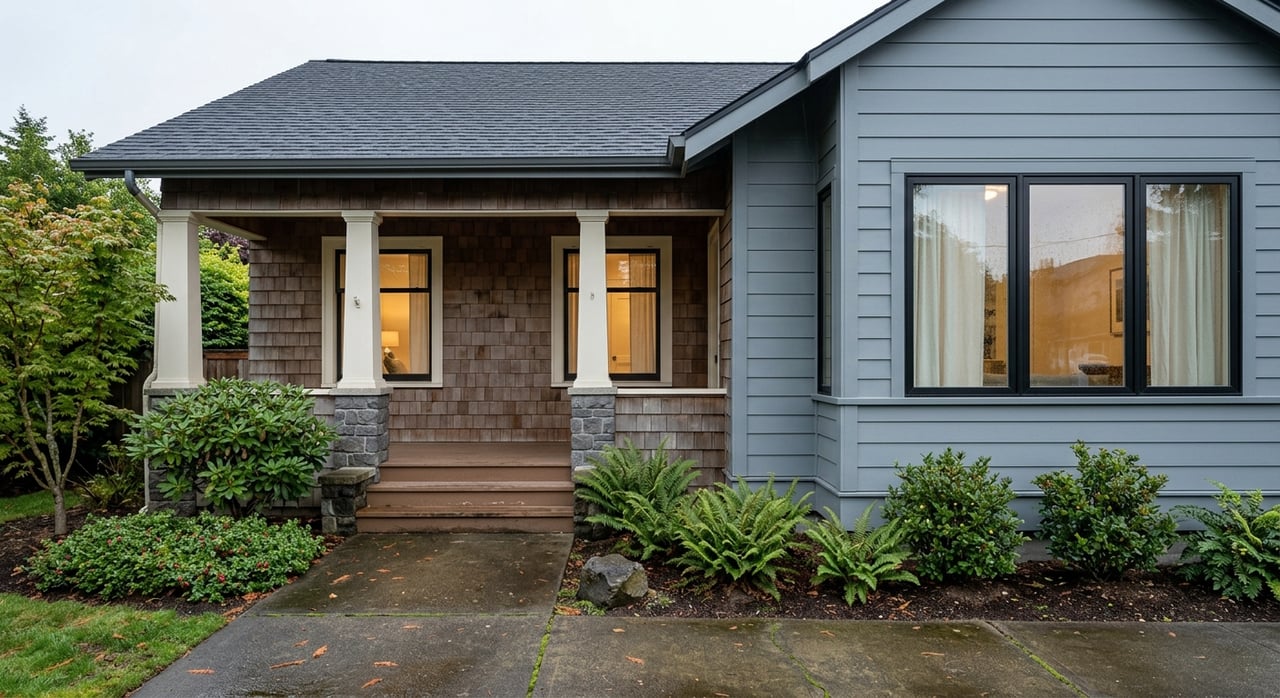
Everett New Construction vs Resale: How to Choose
July 2, 2026
July 2, 2026
Trying to decide between a brand-new home and an older property in Everett? You are not alone. In this market, that choice can shape your budget, your timeline, and how much work you take on after closing. The good news is that Everett gives you real options, and understanding the tradeoffs can help you buy with more confidence. Let’s dive in.
Everett is not a market where one housing style dominates everything else. According to the City of Everett’s 2023 ACS-based housing data, the city had 47,499 housing units, including 509 built in 2020 or later, 3,557 built from 2010 to 2019, and 7,258 built in 1939 or earlier.
That means newer homes are a relatively small slice of the market. Only about 9% of Everett’s housing stock was built in 2010 or later, while nearly 65% was built in 1979 or earlier. If you are shopping here, the new-versus-classic decision is not theoretical. It is a very real part of the home search.
Budget matters too. Census QuickFacts reports a 2020-2024 median value of owner-occupied housing units in Everett of $565,300, with median monthly owner costs with a mortgage at $2,343.
In a market at this price point, repair costs, energy performance, and future project needs can have a big impact on what a home truly costs you over time. That is why it helps to look past curb appeal and think about ownership as a whole.
For many buyers, new construction offers the easiest path to a smoother move. The biggest advantage is often fewer immediate repairs. Newer homes typically start with newer systems, newer materials, and less deferred maintenance.
That can be especially appealing if you want a home that feels more predictable right away. Instead of budgeting for near-term upgrades, you may be able to focus on moving in and settling into your routine.
Energy efficiency is one of the clearest benefits of a newer home. The U.S. Department of Energy notes that adding insulation during construction is more cost-effective than retrofitting later, and that air sealing is a key part of building an efficient, moisture-conscious home.
In practical terms, that means newer homes are often easier to build with tighter envelopes, more insulation, and higher-performance windows from the start. Actual results still depend on the builder and the final construction quality, but the retrofit burden is usually lower than it is with an older home.
If your goal is lower hassle and fewer surprise improvement projects, this can be a major advantage. It is not just about utility savings. It is also about avoiding a long to-do list after you get the keys.
A classic home may need updates soon after purchase. A newer home is less likely to need immediate work on major components simply because those components are newer.
That can make planning easier if you are balancing a move, a commute, or family logistics. For buyers who value simplicity, that lower-friction move-in experience is often one of the strongest arguments for buying new.
If you are buying a completed new home, the process may feel straightforward. If you are building, expanding, or buying a home that still needs work after closing, timing gets more important.
The City of Everett’s Permit Services department processes private construction and development permits. Land-use permits may also be required when a project needs to meet zoning or other development-code standards.
The city also notes that updated critical-area regulations are effective June 1, 2026, and that the 2024 Washington State Building Codes are delayed until May 3, 2027. If your purchase includes unfinished work or future plans, local approval timelines should be part of your decision.
Older homes in Everett appeal to buyers for very different reasons. Many offer character, established surroundings, and the kind of distinct architecture that can be hard to find in newer construction.
Everett also has designated historic overlay zones in Rucker-Grand, Norton-Grand, and Riverside. The city’s historic preservation program uses design standards and neighborhood conservation guidelines to help additions and new development reflect historic character.
If you are drawn to older architecture or want a home that feels more unique, that local context matters. In Everett, classic homes are not just leftovers from an earlier era. They are an important part of the city’s housing landscape.
A classic home can give you room to create value over time. That may mean updating finishes, improving efficiency, or exploring future changes to the property.
But in Everett, lot potential is very site-specific. The city’s development regulations set standards for minimum lot area, width, depth, frontage, and lot coverage. The city’s middle-housing guidance also notes that some newer housing forms do not necessarily require a large lot.
The city’s ADU rules show that some neighborhoods may support additional units when setbacks, height, and site design standards are met. So while an older home may offer upside, the real flexibility depends on the parcel, zoning, and overlays, not age alone.
Character can be a real plus, but older homes often come with more complexity. If you are considering a classic property, it is smart to budget for more inspection detail and more follow-up planning.
One major factor is energy performance. The Department of Energy says many older homes have less insulation than homes built today, and it is generally easier to add insulation during construction than after the fact.
A home energy audit can help identify where insulation and air sealing may be needed. That kind of information can help you estimate upgrade costs before you commit to a renovation plan.
If the home was built before 1978, lead-based paint is an important consideration. The EPA says homes built before 1978 are more likely to contain lead-based paint, including 87% of homes built before 1940 and 24% of homes built from 1960 to 1978.
This matters because federal disclosure rules apply to most pre-1978 housing, and renovation work that disturbs painted surfaces must follow lead-safe practices. A project that looks simple at first can become more involved once safety requirements are part of the plan.
For buyers comparing old versus new, this is one of the biggest potential cost differences. It does not mean you should avoid older homes. It means you should evaluate them with clear eyes and realistic numbers.
Not every classic home has the same renovation potential. The City of Everett says critical areas include wetlands, flood-prone areas, and geologically hazardous areas, and that site-specific studies may be needed to assess property conditions.
If a home sits near one of these areas, additions, grading, or exterior work may require extra review or a longer timeline. This is one reason two similar-looking homes can have very different long-term possibilities.
The better choice usually comes down to your goals, your tolerance for projects, and how you want to spend your money after closing. In Everett, both paths can make sense.
New construction may be the better fit if you want:
A classic home may be the better fit if you want:
The key is to compare homes based on total ownership picture, not just purchase price. A lower-maintenance home may save you time and stress. A classic home may give you long-term upside if the property, zoning, and your budget all line up.
When you are choosing between new construction and a classic home in Everett, it helps to ask a few practical questions early:
These are the kinds of details that can make one option feel exciting and the other feel expensive, even if the list prices are close. Looking at the full picture helps you avoid surprises.
Whether you are looking for a low-maintenance new home or a classic Everett property with long-term potential, local guidance matters. If you want help weighing the tradeoffs, planning your search, or evaluating a specific property, connect with Dani Robinett for practical, neighborhood-level advice.
Stay up to date on the latest real estate trends.
Dani is dedicated to helping you find your dream home and assisting with any selling needs you may have. Contact her today for a free consultation for buying, selling, renting, or investing in Washington.
DANI ROBINETT
ADDRESS 1000 SE EVERETT MALL WAY SUITE 201 EVERETT, WA 98208