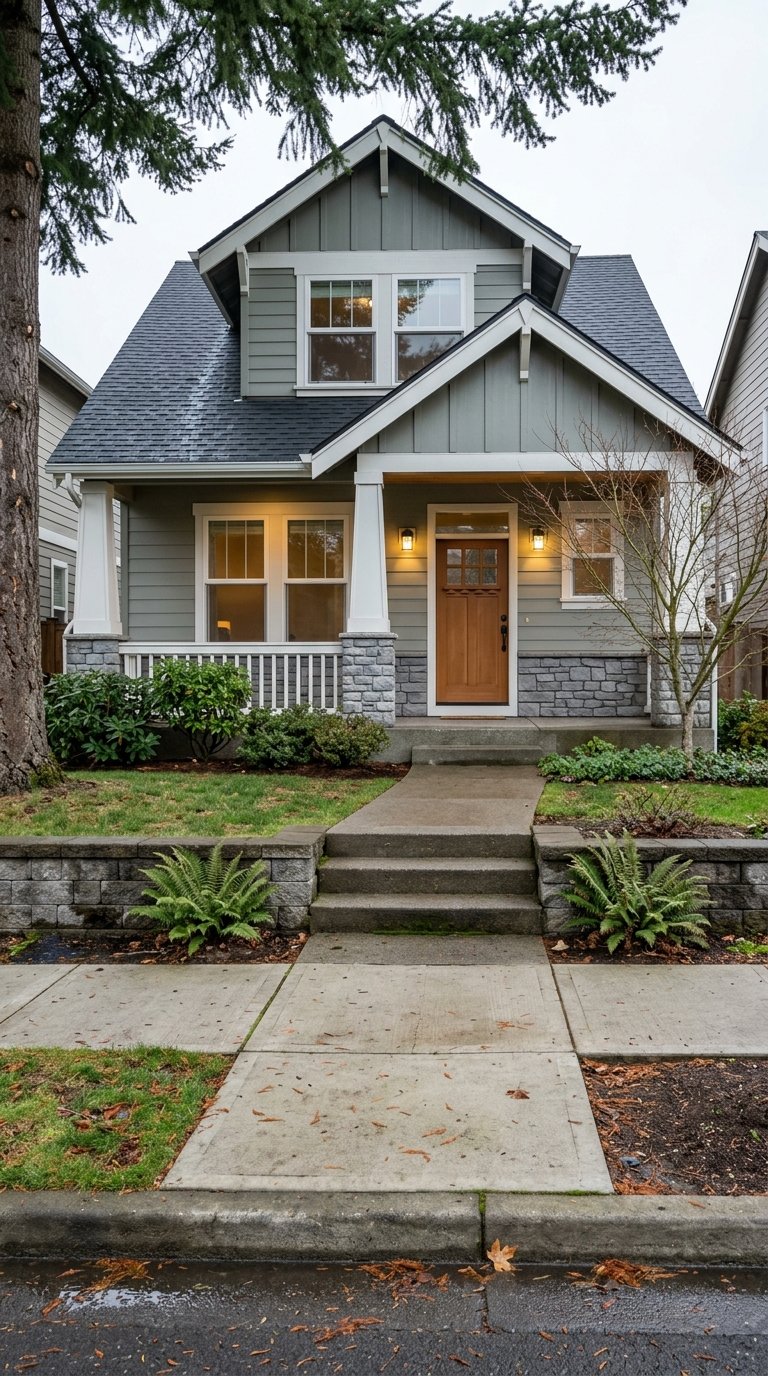
Walkable Edmonds Neighborhoods for Daily Living
June 4, 2026
June 4, 2026
Looking for a place where you can grab coffee, run a few errands, take a waterfront walk, and meet friends for dinner without getting in the car every time? In Edmonds, that kind of lifestyle is possible, but it is also very location-specific. If you are thinking about moving to Edmonds or choosing between neighborhoods, it helps to know where walkability is strongest, where it is still growing, and what daily life really feels like on foot. Let’s dive in.
Edmonds has a walkable identity, but it is not spread evenly across the city. The most car-light lifestyle is concentrated in the downtown and waterfront core, where shops, dining, parks, transit, and public spaces sit close together.
The City of Edmonds describes downtown as compact and walkable, with the Creative District covering the heart of downtown in an area about one mile in diameter. That gives you a good sense of scale. In practical terms, the easiest everyday walking routine is found in and around downtown, the waterfront, and the station area.
A useful data point supports that pattern. Walk Score shows a downtown Edmonds location near Edmonds Station at 91 out of 100, while the citywide average is 48. That gap shows why one address in Edmonds can feel very different from another if walkability is high on your priority list.
If you picture Edmonds as a place for morning coffee, an easy lunch break, local shopping, and a waterfront sunset stroll, you are really picturing downtown. The city says the walkable downtown spreads out from the central fountain and includes galleries, shops, boutiques, restaurants, cafes, bistros, day spas, and beachfront dining.
The Creative District sits at the center of that experience. It adds an arts-and-culture layer to everyday living that helps downtown feel active beyond simple errands. Instead of driving from one stop to the next, you can move through a compact district that supports a more connected routine.
For many buyers, walkability is not just about exercise. It is about convenience and rhythm. Downtown Edmonds supports that with a mix of places where you can stop for coffee, pick up a few items, meet someone for lunch, or enjoy an evening out close to home.
The Edmonds Waterfront Center adds another practical and social anchor. It offers coffee, pastries, ice cream, lunch, and public programming, which strengthens the sense that downtown Edmonds works as an everyday gathering place, not just a destination for occasional visits.
A walkable neighborhood feels more useful when it gives you things to do beyond the basics. Downtown Edmonds includes cultural anchors like Edmonds Theater, Cascadia Art Museum, and Edmonds Center for the Arts.
That mix matters because it makes a car-light lifestyle feel fuller. You are not just walking to complete tasks. You are also walking to enjoy your free time.
One of Edmonds’ biggest advantages is how close the waterfront is to daily life. In many cities, the shoreline feels separate from where you actually live your routine. In Edmonds, the waterfront sits close enough to downtown that it can be part of an ordinary day.
The city identifies four beach parks: Brackett’s Landing North, Brackett’s Landing South, Marina Beach Park, and Olympic Beach. The Edmonds Underwater Park is just north of the ferry landing at the foot of Main Street, adding another unique feature to the shoreline area.
For a slower pace, the Edmonds Marsh Interpretive Walkway gives you a quieter walking option with more than 300 feet of boardwalk and 1,700 feet of asphalt walkway. If your ideal neighborhood includes easy access to views, fresh air, and short outdoor breaks, the blocks near downtown and the waterfront are where Edmonds stands out most.
Walkable living is not only about storefronts and restaurants. It also depends on how easy it is to get outside and move through public spaces comfortably. Edmonds has a strong park and open-space network for its size, with 47 park and open-space sites and one mile of shoreline.
The city is also developing a nearly 20-mile Greenway Loop designed for walking, jogging, biking, and rolling away from traffic. That project is intended to connect schools, parks, and open spaces, which can add more flexibility to daily routines over time.
For buyers who want both a neighborhood feel and outdoor access, that is an important part of the Edmonds story. A short walk to downtown is one kind of convenience. A short walk to shoreline parks, marsh views, or a safer route for active transportation is another.
A car-light lifestyle usually works best when walkability and transit support each other. In Edmonds, Edmonds Station is a major part of that equation.
The city says the Community Transit station opened as part of Sound Transit’s Edmonds Station, located between Dayton and Main streets. Sound Transit lists service from the N Line, along with connections to Community Transit routes 102, 130, 166, and 909.
Edmonds also connects to the Edmonds-Kingston ferry route, which the Washington State Department of Transportation describes as a main commuter and recreational connection. For some residents, that makes the downtown core even more practical because transit and ferry access are part of the same general area as dining, waterfront parks, and local services.
If you are searching outside downtown, Westgate and Five Corners are worth watching. City planning work around Neighborhood Centers and Hubs has focused on mixed-use, walkable neighborhoods, and earlier studies looked at Westgate and Five Corners specifically.
These areas can offer useful convenience, especially for shopping and day-to-day needs. Still, they are best described as secondary walkability nodes rather than the same kind of compact, fully walkable district you get in downtown Edmonds.
The city notes that shopping and dining continue along Highway 99 and in district centers like Westgate, Five Corners, Firdale Village, and Perrinville. Highway 99 is also seeing upgrades such as new sidewalks, bike lanes, lighting, and streetscape improvements.
That said, city planning materials still describe ongoing corridor challenges. So if you are comparing neighborhoods, it is fair to see this part of Edmonds as improving and evolving, but not yet matching the downtown waterfront experience for daily walking.
If walkability is near the top of your list, the biggest thing to remember is that Edmonds is highly walkable in pockets, not uniformly. Two homes in the same city can offer very different daily experiences depending on how close they are to downtown, the waterfront, and Edmonds Station.
That means your home search should start with your routine. Do you want to walk to coffee and dinner? Do you want easy shoreline access? Do you want transit nearby for commuting? If the answer is yes, narrowing your search to the downtown core and nearby waterfront blocks may make the most sense.
If your priority is more space, a different price point, or a specific home style, areas outside the core may still be a strong fit. You may simply be trading a fully walkable lifestyle for a more partial one, where some errands or outings are easy on foot and others are more car-dependent.
Edmonds offers something that can be hard to find in the North Sound: a genuine small-city walkable core with waterfront access, cultural amenities, transit connections, and everyday convenience in one compact area. That combination is what makes it appealing to buyers who want a slower, more connected daily rhythm.
At the same time, it helps to go in with realistic expectations. The best version of walkable Edmonds is concentrated around downtown, the waterfront, and the station area. Once you understand that, you can shop with more clarity and choose the part of Edmonds that best fits the way you want to live.
If you are weighing Edmonds against other Snohomish County neighborhoods, or trying to match your budget with the lifestyle you want, working with a local expert can help you focus on the blocks and pockets that truly fit your goals. When you are ready to talk through your options, connect with Dani Robinett to schedule a consultation.
Stay up to date on the latest real estate trends.
Dani is dedicated to helping you find your dream home and assisting with any selling needs you may have. Contact her today for a free consultation for buying, selling, renting, or investing in Washington.
DANI ROBINETT
ADDRESS 1000 SE EVERETT MALL WAY SUITE 201 EVERETT, WA 98208