In-Town Snohomish vs Acreage Living: What Fits Best?
May 14, 2026
May 14, 2026
Are you torn between a charming home near downtown Snohomish and a property with room to spread out? It is a common decision for buyers who love Snohomish but want very different day-to-day lifestyles. If you are weighing convenience against space, this guide will help you understand the real tradeoffs so you can choose with confidence. Let’s dive in.
In-town Snohomish usually refers to the compact city area with a walkable historic core, mixed-use districts, and city services. Historic Downtown Snohomish functions as a shopping and event center with boutiques, coffee shops, bars, restaurants, and professional services. The Pilchuck District and Midtown District also blend residential and commercial uses, which supports a more connected daily routine.
This part of Snohomish often feels different from newer suburban neighborhoods because many homes and buildings date back to the late 1800s and early 1900s. That can mean more character, more architectural variety, and an older neighborhood feel. If you love established streets and a strong sense of place, this is often part of the appeal.
In-town living also tends to mean city utilities, a denser street network, and a more pedestrian-oriented environment. The city has focused on sidewalk, lighting, parking, and crosswalk improvements in the downtown area. For many buyers, that translates into easier errands, more walkable outings, and less dependence on a large lot for lifestyle value.
If you want to be closer to everyday activity, in-town Snohomish stands out. The city highlights riverfront connections, sidewalks, and access to the Centennial Trail, which starts in Snohomish and serves both recreation and non-motorized commuting. There are also about 170 acres of parks and open space within city limits.
That kind of access can shape how you spend your time. You may be able to grab coffee, meet friends downtown, or head out for a walk or bike ride without planning your whole day around driving. For buyers who want a more connected rhythm, this can be a major quality-of-life benefit.
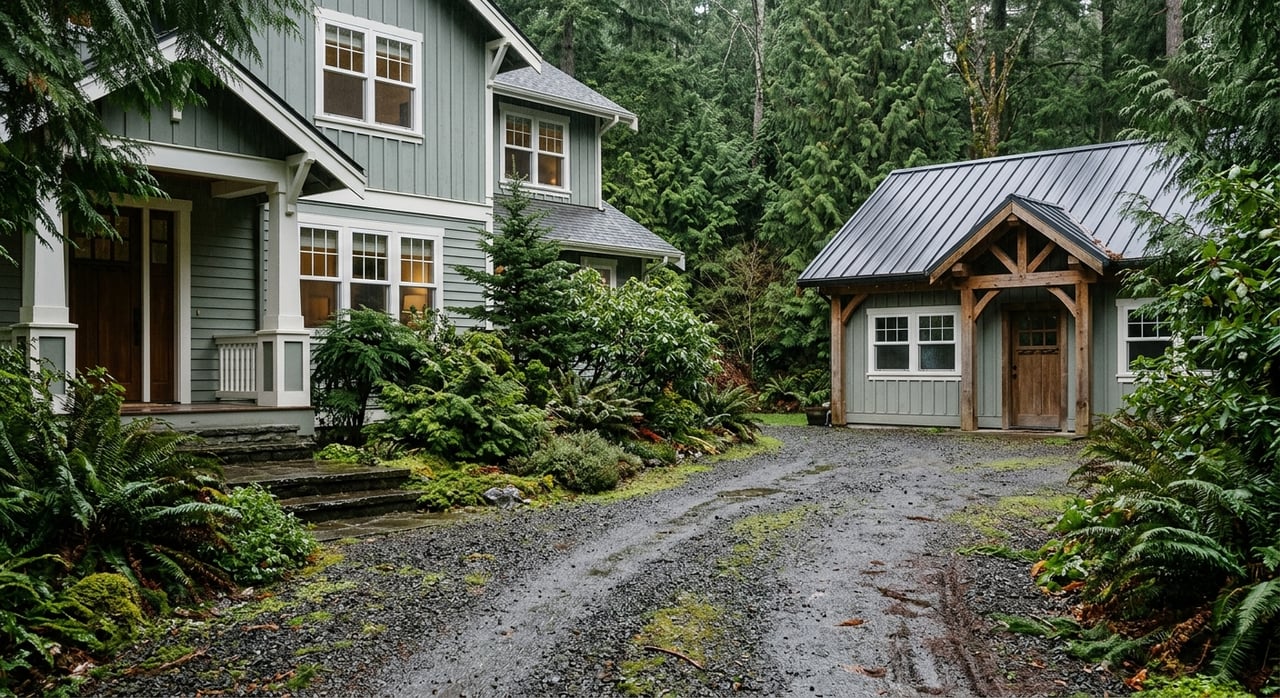
Acreage living usually offers something in-town properties cannot: room. If your wish list includes a workshop, detached garage, greenhouse, storage building, or more outdoor flexibility, rural properties may be a better match. Snohomish County specifically identifies accessory buildings like sheds, workshops, detached garages, greenhouses, and agricultural buildings as common rural permit categories.
That extra space can open up more possibilities for hobbies, storage, and land-based living. You may have more privacy, more distance from neighbors, and more room to adapt the property over time. For some buyers, that freedom is worth the added responsibility.
Still, acreage does not mean unlimited use. County rules, setbacks, environmental regulations, and permitting requirements can all affect what you build and how you use the land. Even some structures that may be permit-exempt still must meet other county requirements.
One of the biggest differences between in-town Snohomish and acreage living is what you are responsible for maintaining. Inside Snohomish city limits, the city provides drinking water and operates the sewer system. That generally creates a simpler ownership experience because you are not managing private water or wastewater systems yourself.
On rural properties, that picture often changes. Snohomish County says rural homes need an approved well and on-site septic system for a residence or any building with plumbing. Development on parcels with existing septic systems also needs county approval before a building permit is issued.
For many buyers, this is the clearest practical tradeoff. In-town living often means fewer utility systems to personally monitor. Acreage living can mean more independence, but it also means more self-management.
If you are considering acreage, it helps to understand what comes with a well and septic system. Washington health guidance says septic systems are common in rural areas without centralized sewer, and the homeowner is responsible for operating and maintaining them. Routine care matters because neglected systems can lead to contamination or costly failures.
Private wells also require attention. State guidance notes that homeowners are responsible for monitoring and maintaining their water quality. In simple terms, if you buy acreage, your due diligence should include more than the house itself. You also need to understand the property’s water and waste systems.
This is not a niche issue in Snohomish County. The county says more than 78,000 homeowners rely on septic systems. That makes septic ownership common, but it does not make it hands-off.
Many buyers assume lot size is the main difference between these two options, but commute logistics matter just as much. Snohomish sits near Highway 9 and Highway 2, with access toward major regional job centers. Community Transit also connects Snohomish riders to Everett Station, Ash Way Park & Ride, Lynnwood, Seattle, and other hubs, with options that can connect onward to Bellevue.
The broader pattern shows that commuting is already part of life for many residents. Census data shows a mean travel time to work of 29.1 minutes for Snohomish city and 30.8 minutes for Snohomish County. That does not predict your exact commute, but it does show that many people are traveling beyond the immediate area for work.
Where acreage can change the equation is in the extra time it takes to reach main roads, transit connections, or park-and-ride options. That added first leg of the trip may not look dramatic on paper, but it can shape your daily routine. If you commute often, this is worth thinking through before you fall in love with a larger parcel.
For buyers heading toward Everett, one detail matters more than many expect. The US 2 trestle is the only direct highway route across the Snohomish River to I-5 in Everett, and state transportation guidance describes the westbound trestle as busier and more congested during peak periods. That makes location efficiency especially important if your schedule depends on a predictable drive.
A home farther from town can add more than distance. It can add extra local driving before you even get onto the main highway network. If your work, school, or regular appointments pull you west, this tradeoff deserves a close look.
Acreage can support a wider range of property uses, but it can also come with more rules. Snohomish County has about 63,000 acres of designated agricultural lands identified for long-term preservation. The county also notes that activities on or near designated resource lands may not always align neatly with residential expectations.
That matters because some buyers picture acreage as a blank canvas. In reality, nearby land use, resource management activity, and county regulations can all affect how a property lives over time. The county also directs growth toward urbanizing areas where urban services are more appropriate, which reinforces the distinction between city living and rural living.
If you are considering a hobby farm setup, land clearing, driveway work, or a future shop building, make sure you understand what permits may be required. County guidance says residential or commercial construction on farmland typically requires a land-disturbing activity permit along with a building permit. The more land you buy, the more important this planning step becomes.
The easiest way to think about this decision is to focus on how you want your days to feel. In-town Snohomish trades land for convenience. Acreage trades convenience for space, autonomy, and more systems to manage.
You may prefer in-town Snohomish if you want:
You may prefer acreage living if you want:
Neither option is better across the board. The right choice depends on whether you want simpler systems and convenience, or more land and more control over how you use it.
Before you choose, think beyond the home itself. Picture your weekday routine, your weekend habits, and how much property maintenance you are truly comfortable taking on. A beautiful acreage property can be a great fit, but only if you are ready for the added systems and planning that often come with it.
On the other hand, an in-town home may give you less land but more ease. If you value access, walkability, and simpler utilities, that tradeoff may feel worth it every single day. The key is to match the property type to your real lifestyle, not just your idealized one.
If you want help comparing specific homes in Snohomish, working through commute patterns, or evaluating what a property may require long term, Dani Robinett can help you weigh the details and find the right fit for your goals.
Stay up to date on the latest real estate trends.
Dani is dedicated to helping you find your dream home and assisting with any selling needs you may have. Contact her today for a free consultation for buying, selling, renting, or investing in Washington.
DANI ROBINETT
ADDRESS 1000 SE EVERETT MALL WAY SUITE 201 EVERETT, WA 98208