Edmonds Bowl Lifestyle vs Uplands: Everyday Living
May 7, 2026
May 7, 2026
Wondering whether Edmonds Bowl or the uplands would feel more like home? If you are choosing between a walkable, waterfront-centered routine and a quieter, more residential setting above town, the difference matters in your day-to-day life. This guide breaks down how each area compares so you can match your home search to the way you actually live. Let’s dive in.
In Edmonds, the Bowl generally refers to the downtown core and the nearby streets closest to the waterfront, ferry terminal, and main business district. It reads as the city’s historic core, with a compact layout and strong connection to beaches, parks, shops, and restaurants.
The “uplands” is a useful shorthand for Edmonds’ higher-elevation residential areas above the Bowl. It is not a formal city neighborhood name, but it helps describe the hillside neighborhoods where daily life tends to feel more private, more residential, and more car-oriented.
If you want to step out your front door and grab coffee, run errands, meet friends for dinner, or head toward the waterfront, the Bowl stands out. Downtown Edmonds has a Walk Score of 81, and the city describes downtown as compact and walkable.
That walkable setup shapes everyday life in a big way. Arts, galleries, restaurants, coffee shops, events, and street-level shopping are concentrated in the core, which makes the Bowl feel active and convenient without needing a long drive for the basics of a fun day out.
The uplands offer a different rhythm. In hillside areas such as Talbot Park, neighborhood data points to steep terrain, private lots, and much lower walkability, with a Walk Score of 20 and Transit Score of 0.
That does not mean the uplands are far from everything. It means your routine is more likely to involve driving to errands, parks, and downtown rather than doing most of it on foot.
One of Edmonds’ biggest draws is how closely the waterfront connects to downtown life. The city highlights west-facing slopes above Puget Sound, water and Olympic Mountain views, four beaches, waterfront parks, and a marine-oriented downtown.
In the Bowl, those features are part of your daily-use zone. Beaches, parks, the ferry terminal, and downtown amenities are clustered closely together, so waterfront access feels less like a special trip and more like part of normal life.
The uplands trade some of that immediate waterfront convenience for a more residential feel. Hill neighborhoods tend to be less tied to the downtown pedestrian core, which often makes them feel quieter and more tucked away.
If you value lower day-to-day activity outside your front door, that can be a real plus. You are still close to downtown Edmonds, but your home base may feel more removed from the busiest parts of town.
Edmonds has strong regional transportation options for a city its size. Edmonds Station serves Amtrak Cascades, the Sounder N Line, and Community Transit bus routes, while the Edmonds Ferry Terminal connects riders to Kingston.
If transit access matters to you, the Bowl has the edge because it places you closest to those hubs. That can simplify commuting, day trips, and car-light living.
In the uplands, you are usually giving up some transit convenience in exchange for space, privacy, and elevation. For many buyers, that is a worthwhile trade if the priority is a larger home site or a more residential setting.
This is one of the clearest lifestyle splits between the two areas. The Bowl supports a more connected, on-foot or transit-friendly routine, while the uplands support a more home-centered and drive-oriented routine.
The Bowl has some of Edmonds’ oldest and most character-rich housing stock. City historic survey material places historic resources between the waterfront and 9th Avenue, and the city’s history notes early homes built after 1900 with simple wood framing.
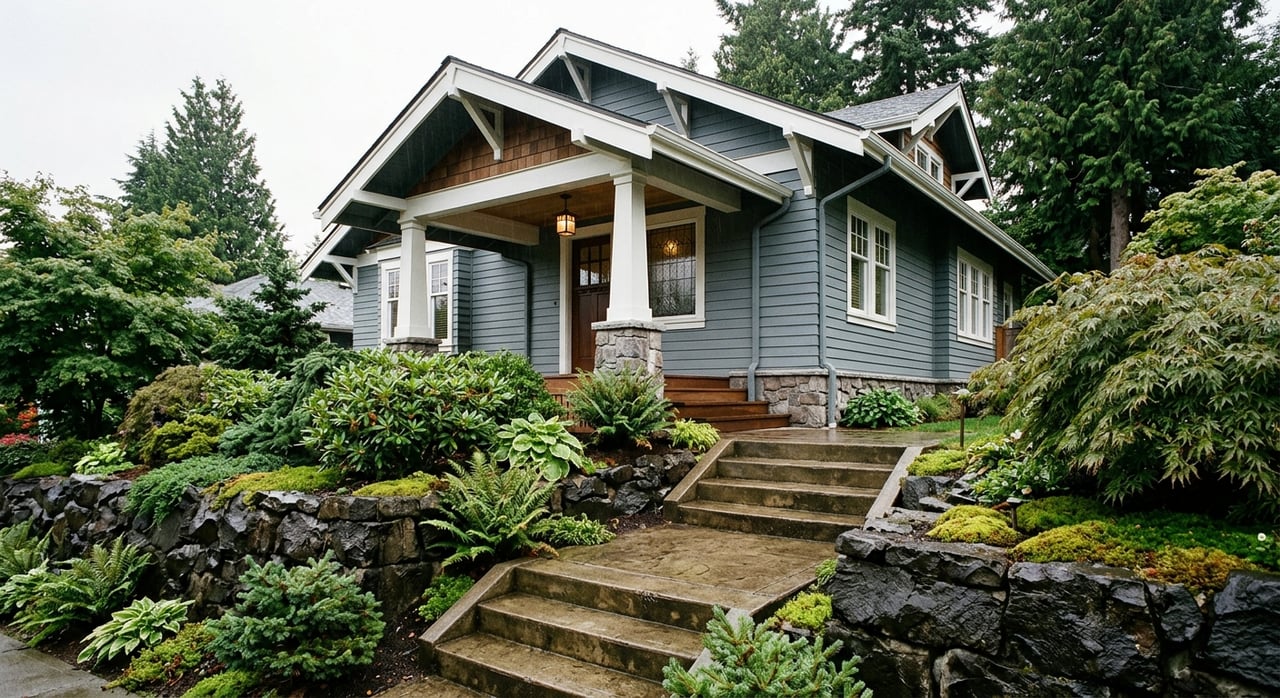
Today, that translates into a broad mix of housing styles. Neighborhood guides describe the Bowl as including luxury waterfront estates, updated midcentury ramblers, tri-levels, Craftsman cottages, and newer townhomes.
The uplands and hill neighborhoods tend to skew toward larger lots, more privacy, and a stronger single-family orientation. Areas like Talbot Park are described as private and steeply terraced, while Perrinville-Seaview shows larger average home and lot sizes.
In Perrinville-Seaview, reported figures show an average single-family size of 2,525 square feet and a median lot size of 12,632 square feet. That helps explain why many buyers look uphill when they want more yard space and separation from neighbors.
For citywide context, Edmonds’ 12-month median sale price is about $939,812, while the median single-family sale price is about $1.05 million. Both the Bowl and many desirable hill neighborhoods tend to sit above those citywide numbers.
That means you are often shopping in premium pockets either way. The bigger question is what kind of premium you are paying for: location and convenience, or lot size, privacy, and views.
Current market snapshots show the Bowl as one of Edmonds’ most competitive areas. Recent reported figures place the Bowl around $1.18 million in one last-month sample, while a 12-month sample from another source is closer to $1.37 million.
The exact number can vary depending on timing and sample size, but the pattern is consistent. Buyers often pay more in the Bowl for walkability, proximity to downtown, and access to the waterfront.
The uplands are not necessarily the budget option. Recent neighborhood data places Talbot Park around $1.70 million and Perrinville-Seaview around $1.18 million, suggesting that some hill neighborhoods can match or exceed Bowl pricing when views, privacy, and lot size are part of the package.
That is important if you are comparing homes only by list price. Two similarly priced Edmonds homes may offer very different lifestyles depending on whether they are in the Bowl or farther uphill.
The Bowl usually makes the most sense if you want to walk to coffee, restaurants, art spaces, the ferry, and the waterfront. It is the best fit for buyers who want a small-city downtown feel and enjoy daily activity close to home.
You may also prefer the Bowl if transit access matters or if you enjoy older homes with character. For many buyers, the biggest value here is not just the house itself, but how much easier and more enjoyable everyday routines can feel.
The uplands tend to fit buyers who want quieter streets, more privacy, and more house or yard in a residential setting. If your ideal routine includes driving into downtown when you want it, then returning home to a more tucked-away environment, the uplands may feel like the better fit.
This option often appeals to buyers who prioritize lot size, elevated settings, and a less active street scene. In Edmonds, that can still mean staying close to the core while enjoying a more removed feel at home.
There is no one-size-fits-all winner between Edmonds Bowl and the uplands. The Bowl is about walkability, social energy, transit access, and close-in waterfront living, while the uplands are about privacy, residential space, and a quieter daily pace.
If you are weighing both, the smartest move is to compare them through the lens of your real routine. Think about how often you want to walk versus drive, how much space you want at home, and whether being near downtown Edmonds would energize you or wear on you.
If you want help narrowing down the right Edmonds fit for your lifestyle and budget, connect with Dani Robinett for practical local guidance and a clear plan.
Stay up to date on the latest real estate trends.
Dani is dedicated to helping you find your dream home and assisting with any selling needs you may have. Contact her today for a free consultation for buying, selling, renting, or investing in Washington.
DANI ROBINETT
ADDRESS 1000 SE EVERETT MALL WAY SUITE 201 EVERETT, WA 98208